

The third volume of the acclaimed Bau Kunst series, Fake Designs of Japanese Architecture, turns its research focus toward Japan and offers a critical investigation of pre-modern wooden architecture. This compelling study reconsiders the perceived harmony between structure and space in medieval Japanese buildings, proposing that this balance may in fact be a carefully constructed architectural illusion — a sophisticated layering of structural logic and visual appearance.
Centering on medieval temples in Japan, the publication examines how architectural elements were designed to create spatial coherence while subtly concealing structural complexity. By questioning long-standing assumptions about authenticity, construction, and aesthetic unity in traditional Japanese architecture, the book opens new perspectives on architectural history and theory.
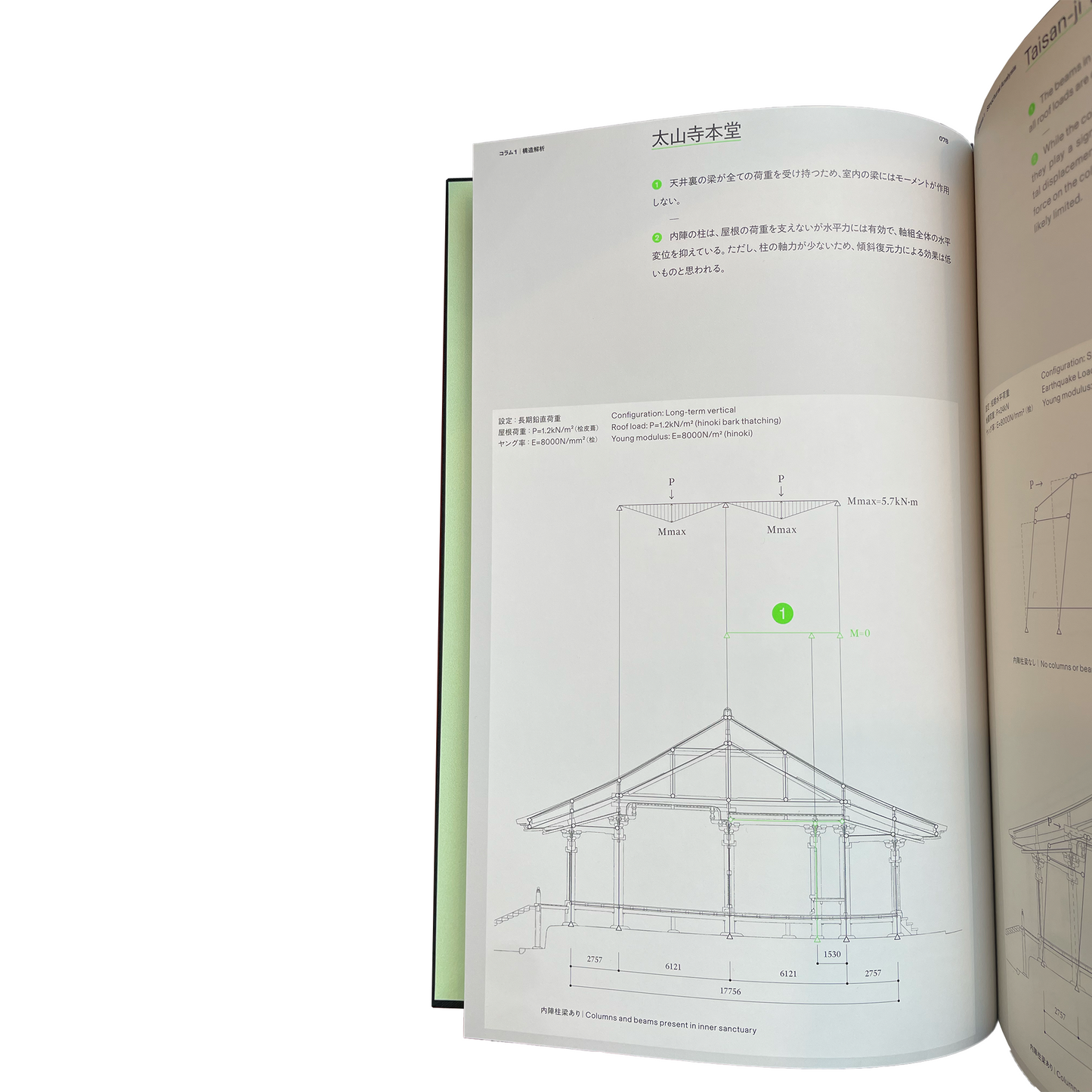
The volume begins with a curated reprint of influential international writings on Japanese architecture, placing the research within a global discourse. It then presents in-depth studies of selected medieval temple structures, documented and analyzed specifically for this project. The book concludes with critical essays and a roundtable discussion featuring architectural historian Wataru Mitsui, offering further reflection on historiography, perception, and the interpretation of architectural form.
An essential publication for readers interested in Japanese architecture, medieval temple design, architectural theory, and critical spatial analysis, Fake Designs of Japanese Architecture is a thought-provoking contribution to contemporary architectural research and discourse.